Eating and Nutrition During Jaw Surgery Recovery: A Week-by-Week Guide
Posted on 8/22/2026 by Mountain State Oral and Facial Surgery |
 The hardest part of recovering from corrective jaw surgery usually isn’t discomfort. It’s eating. Swelling, limited opening, and healing bone combine to take chewing off the table for weeks, and plenty of patients hit day three before realizing they have no plan and a refrigerator full of food they can’t touch. The hardest part of recovering from corrective jaw surgery usually isn’t discomfort. It’s eating. Swelling, limited opening, and healing bone combine to take chewing off the table for weeks, and plenty of patients hit day three before realizing they have no plan and a refrigerator full of food they can’t touch.
A little planning fixes almost all of it. What you can eat after jaw surgery changes every couple of weeks, and knowing the sequence in advance is most of the battle. Recovery from this procedure asks more of you than an extraction does, which is one reason it sits among the more involved work our oral and maxillofacial surgeons do. Below is how the diet actually progresses after orthognathic surgery, week by week. Your surgeon’s written instructions always govern, so treat this as the shape of the thing rather than a substitute.
Why the Restrictions Last as Long as They Do
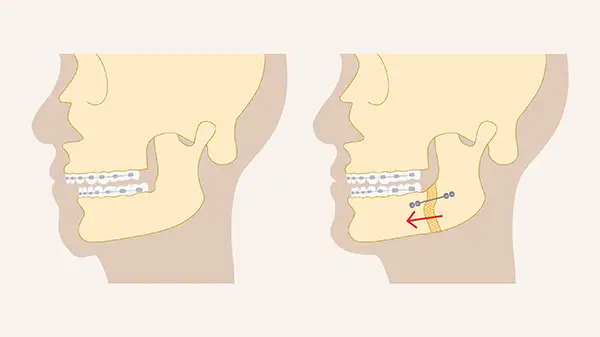
Corrective jaw surgery repositions bone and holds it in place with plates and screws. That hardware is strong enough to keep everything where the surgeon put it. It is not strong enough to absorb full chewing force while the bone underneath is still fusing. The restriction protects the repair, not your comfort.
Most patients today are not wired shut. Guiding elastics are the more common approach, and they let you open a little while training the bite into its new position. That is easier than being wired, but your opening is still limited, and chewing is off the table for weeks rather than days. Six weeks without chewing is a common framework, and some surgeons hold it longer depending on what was moved.
Swelling does its own damage to appetite. It peaks in the first few days and takes weeks to fully settle. Numbness in the lower lip and chin is common early on and makes it hard to tell what is actually in your mouth. Swelling settles on its own. Altered sensation usually improves over months, though it doesn’t always come back completely, which is one of the things your surgeon will have gone over with you before the date. Neither one is a reason to stop eating.
Week One: Liquids Only
Day one is usually a write-off, and that is fine. Anesthesia, swallowed blood, and pain medication together leave most people queasy, so the target for the first 24 hours is hydration rather than nutrition. Water, diluted juice, broth, electrolyte drinks.
From day two the job becomes calories in liquid form. Full liquid means anything that goes down without chewing and without leaving particles behind: milk, kefir, drinkable yogurt, strained cream soups, meal replacement shakes, milkshakes made with real ice cream, and blended fruit thinned out with milk or juice.
Keep everything close to room temperature for the first few days. Hot liquids can aggravate bleeding, and very cold ones are uncomfortable against tissue that is still partly numb. Small and frequent beats three meals by a wide margin. Six to eight intakes across the day is realistic. Trying to drink a full day of calories in three sittings is not.
How you get liquid past a limited opening depends on your surgeon and on how far you can open. Cups, squeeze bottles, syringes, and straws all show up in different protocols at different points, and your surgical instructions will tell you which one applies to you.
Weeks Two and Three: Blended and Pureed
Once swelling starts coming down and you can handle more volume, texture becomes possible as long as nothing requires chewing. This is where a blender earns its spot on the counter.
One caution before you advance: protocols vary more here than anywhere else in the recovery. Plenty of surgeons hold patients on full liquids well past week one, and a few hold them there for the entire no-chew period. Confirm you are cleared to move up before you do, because moving early puts load on a repair that isn’t ready for it.
Almost any normal meal can be blended with enough liquid behind it. Chili, chicken and rice soup, pasta with sauce, lentil stew, mashed sweet potato thinned with milk. Food you actually like, blended, beats another vanilla shake by a wide margin, and appetite comes back faster when meals still taste like meals instead of like supplements.
Two things are worth straining out: seeds and skins. Anything small and hard finds its way around elastics and hardware and stays there. Berries, tomato seeds, and corn are the usual offenders. Rinse after every intake regardless of what you ate, because food sitting against surgical sites is the quickest way to turn a clean recovery into an irritated one.
Weeks Four Through Six: Soft Foods, Still No Chewing
The line people misread is the one between soft and chewable. Food you can mash against the roof of your mouth with your tongue is usually cleared well before real chewing is. Think flaked fish, oatmeal, ripe avocado, ricotta, well-cooked pasta, and eggs.
What still waits: bread, anything that needs a bite taken out of it, tough meat, raw vegetables, nuts, chips, and anything sticky. Gum stays out entirely.
The temptation around week five is real, because by then you feel fine. Feeling fine and being healed are different things, and the bone does not care which one you are experiencing. Your surgeon decides when chewing resumes, and that call rests on imaging and on how the bite is tracking, not on the calendar alone.
Protein and Calories Are the Part Most People Get Wrong
Losing weight after jaw surgery is common and largely avoidable. The trap is that liquid diets fill you up on volume while leaving you short on the two things healing actually runs on.
| • |
Put protein in every intake – Greek yogurt, milk, silken tofu, unflavored protein powder, and bone broth all blend into nearly anything without changing the flavor much.
|
| • |
Reach for calorie-dense, not diet – Whole milk over skim, real ice cream over sorbet, nut butter blended into shakes. This is the one stretch of your life where the lighter option is the wrong one.
|
| • |
Notice what you have actually taken in – Not obsessively. Just enough to catch a day where dinner arrives and you have barely had anything.
|
| • |
Keep water separate from calories – Dehydration shows up fast when every swallow takes effort, and it makes fatigue and headaches noticeably worse. |
Call the office if you can’t keep liquids down for more than a few hours, if weight is dropping quickly, or if you simply aren’t managing the plan. There are workarounds for all of it, and no reason to white-knuckle your way through.
Do the Shopping Before Surgery, Not After
Nobody wants to solve this problem while swollen and tired. A blender or immersion blender, a few freezer containers, shelf-stable shakes for the days you can’t face cooking, and a stocked freezer of blended meals portioned out ahead of time will carry you through the worst of it.
Line up help for the first week too. Someone who can cook, drive, and check on you removes most of the friction that otherwise turns into skipped meals. The paperwork and preparation side of all this lives on our For Patients page, and it is worth going through before the date rather than the night before.
Talk Through the Timeline Before You Commit
Every jaw surgery plan is different, and so is every recovery timeline. A consultation is where you find out what your specific version looks like: how long the no-chew period runs for the movement you need, what your instructions will actually say, and what to have in the house.
Our locations page lists every office along with its contact details. To get on the schedule, request an appointment and bring your questions about the recovery with you.
|
|